
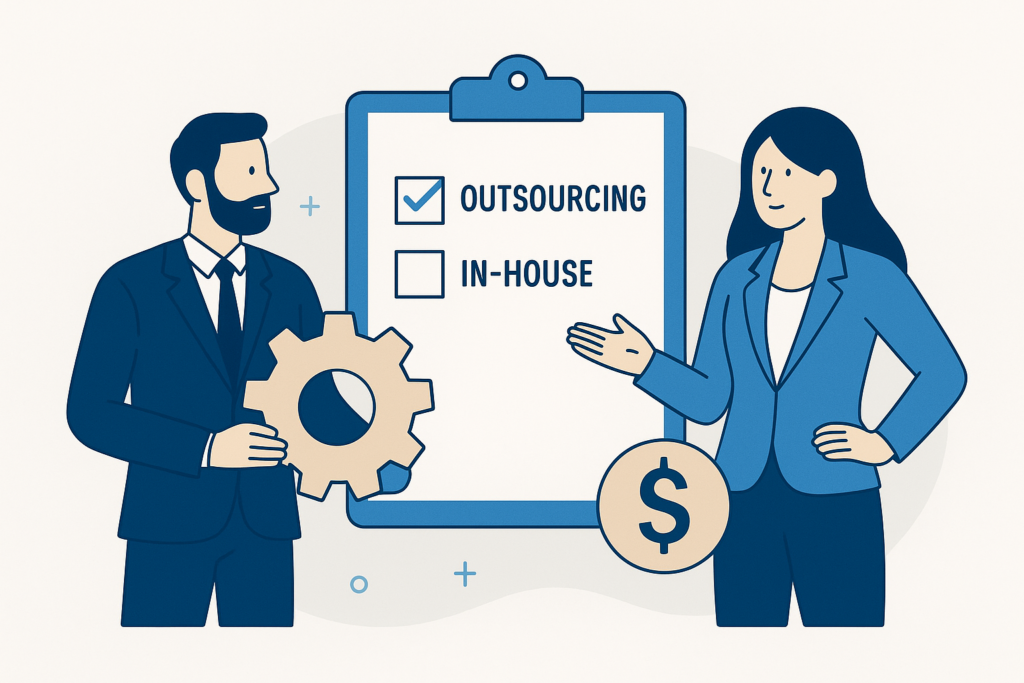
As businesses grow, accounting needs become more complex. One of the most common questions owners face is whether to keep accounting in-house or outsource it.
There is no universal answer. The right choice depends on your business size, complexity, and growth plans. Understanding the differences will help you make the best decision.
What In-House Accounting Looks Like
In-house accounting means hiring one or more employees to handle bookkeeping, accounting, or finance internally.
Advantages
- Direct access to staff
- Familiarity with daily operations
- Immediate responsiveness
Challenges
- Higher fixed costs such as salary and benefits
- Limited expertise from a single hire
- Risk if the employee leaves or underperforms
- Ongoing training and oversight required
For many small businesses, in-house accounting becomes cost-effective only at larger revenue levels or with very complex operations.
What Outsourced Accounting Looks Like
Outsourced accounting involves working with a third-party firm or accountant to manage bookkeeping, reporting, and advisory services.
Advantages
- Access to experienced professionals
- Lower and more predictable costs
- Scalable services as the business grows
- Reduced hiring and training burden
Challenges
- Less visibility into day-to-day transactions
- Requires clear communication and expectations
When done well, outsourcing provides structure and expertise without the overhead of a full-time hire.
Cost Comparison
In-house accounting typically includes:
- Salary
- Payroll taxes
- Benefits
- Software and training
Outsourced accounting is usually a flat monthly fee and often includes multiple services and expertise levels for a lower total cost.
For growing businesses, outsourcing is often more cost-effective until accounting needs become highly specialized or constant.
Which Option Is Right for Your Business?
Here is a general guideline:
- Early-stage and small businesses often benefit from outsourcing
- Businesses experiencing growth may benefit from fractional or virtual accounting support
- Larger organizations with complex reporting may need in-house finance leadership
Many businesses use a hybrid approach, outsourcing day-to-day accounting while retaining strategic oversight internally.
Common Mistakes to Avoid
Business owners often struggle when they:
- Hire in-house too early
- Rely on underqualified staff
- Choose based only on cost
- Lack clear scopes and expectations
The right choice balances cost, expertise, and scalability.
Why the Right Accounting Structure Matters
Your accounting setup affects:
- Financial clarity
- Cash flow stability
- Tax planning
- Decision-making
- Business confidence
Choosing the right structure early prevents costly transitions later.
A Quick Note
If you are unsure which approach fits your business, getting a second opinion can help clarify the path forward.
You can schedule a free consultation through my site if you would like help evaluating your current accounting setup or planning your next step.