
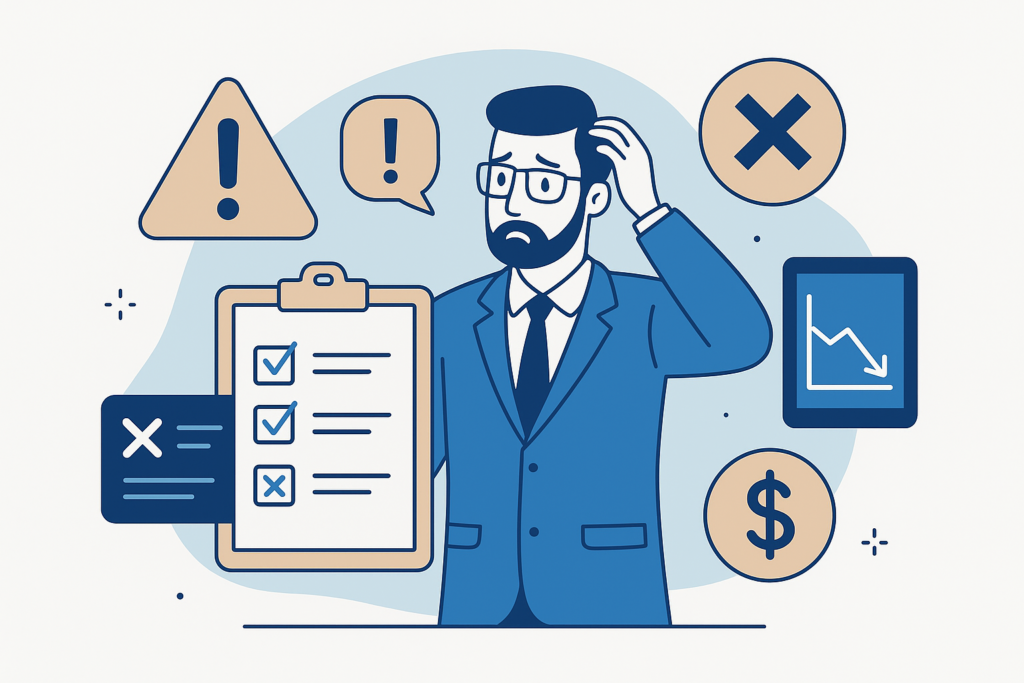
Accounting mistakes are incredibly common, especially for small and growing businesses. Most are not the result of carelessness. They happen when business owners are focused on growth and try to manage accounting as an afterthought.
Unfortunately, even small accounting errors can lead to cash flow problems, tax issues, or poor decision-making.
Here are the most common accounting mistakes and how to avoid them.
1. Mixing Business and Personal Finances
This is one of the most frequent and costly mistakes.
When personal and business expenses are mixed:
- Financial reports become unreliable
- Tax preparation becomes more complicated
- Deductions may be missed
- Audit risk increases
How to avoid it:
Maintain separate bank accounts and credit cards for the business and record owner activity properly.
2. Falling Behind on Bookkeeping
Late or inconsistent bookkeeping creates more problems than it solves.
Common consequences include:
- Inaccurate financial reports
- Missed bills or invoices
- Unexpected tax balances
How to avoid it:
Keep books updated monthly and review reports regularly.
3. Incorrect Account Classifications
Expenses and income placed in the wrong accounts distort financial data.
Examples include:
- Misclassifying loans as income
- Recording owner contributions as revenue
- Grouping one-time costs with regular operating expenses
How to avoid it:
Use a properly structured chart of accounts and review classifications periodically.
4. Ignoring the Balance Sheet
Many business owners focus only on the Profit and Loss statement.
Ignoring the balance sheet leads to:
- Missed debt obligations
- Overstated cash
- Unclear equity position
How to avoid it:
Review the balance sheet alongside the P&L each month.
5. Not Reconciling Accounts
Reconciliations ensure your books match reality.
Skipping reconciliations can result in:
- Duplicate transactions
- Missing expenses
- Inflated balances
How to avoid it:
Reconcile bank and credit card accounts monthly.
6. Waiting Until Tax Time to Review Financials
Reviewing financials only once per year limits their value.
Issues that build slowly over time become much harder to fix later.
How to avoid it:
Use accounting reports as a monthly management tool, not just for compliance.
7. Trying to Do Everything Alone
Accounting often becomes too complex for one person to manage accurately while running the business.
This leads to:
- Burnout
- Errors
- Missed opportunities
How to avoid it:
Recognize when professional support would save time and reduce risk.
Why Avoiding These Mistakes Matters
Correct accounting supports:
- Better decisions
- Stronger cash flow
- Easier tax preparation
- Long-term business stability
Small corrections now prevent bigger problems later.
A Quick Note
If any of these mistakes sound familiar, you are not alone. Many issues can be corrected quickly once they are identified.
You can schedule a free consultation through my site if you would like help reviewing your books or improving your accounting processes.